X/O
2023 — today
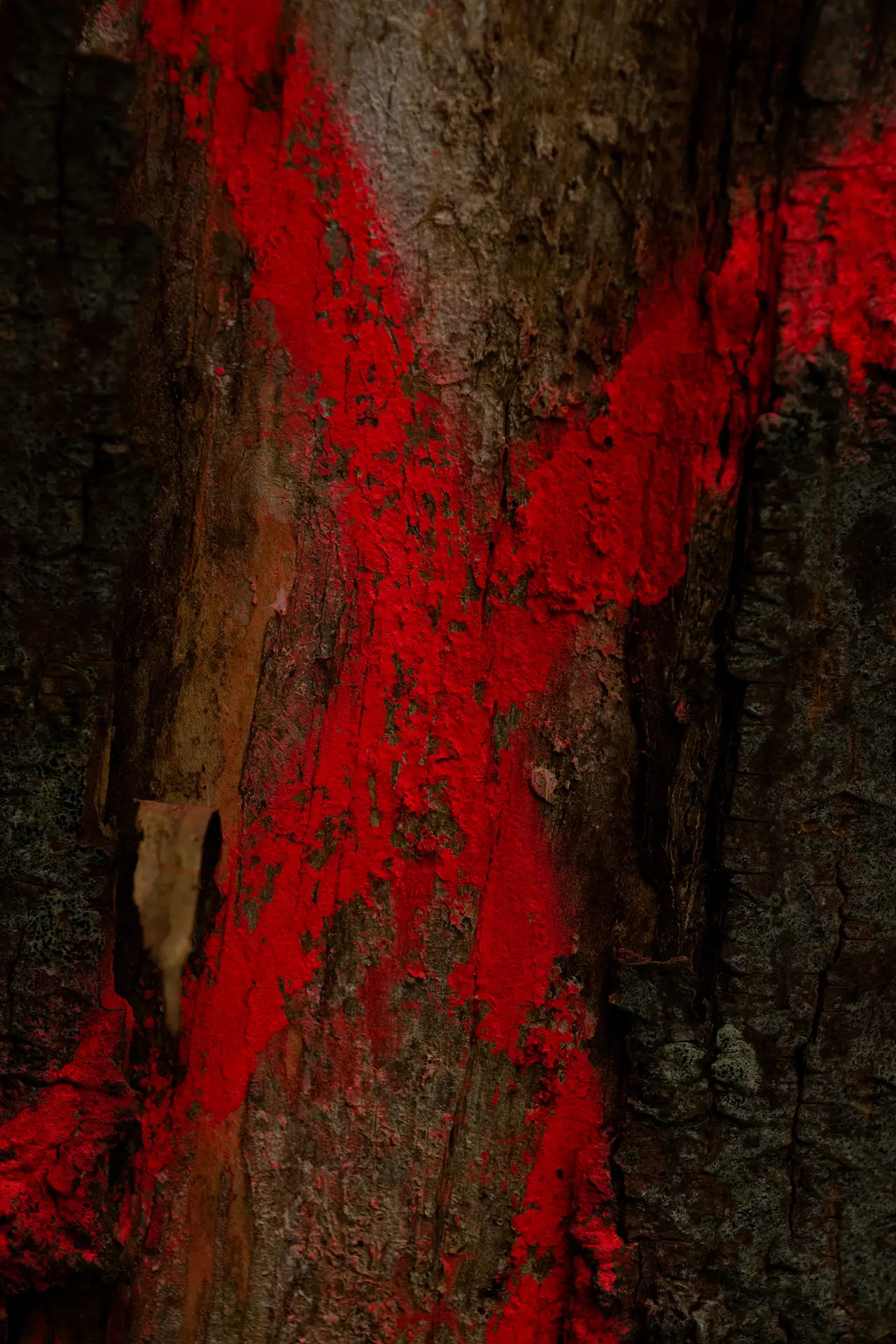
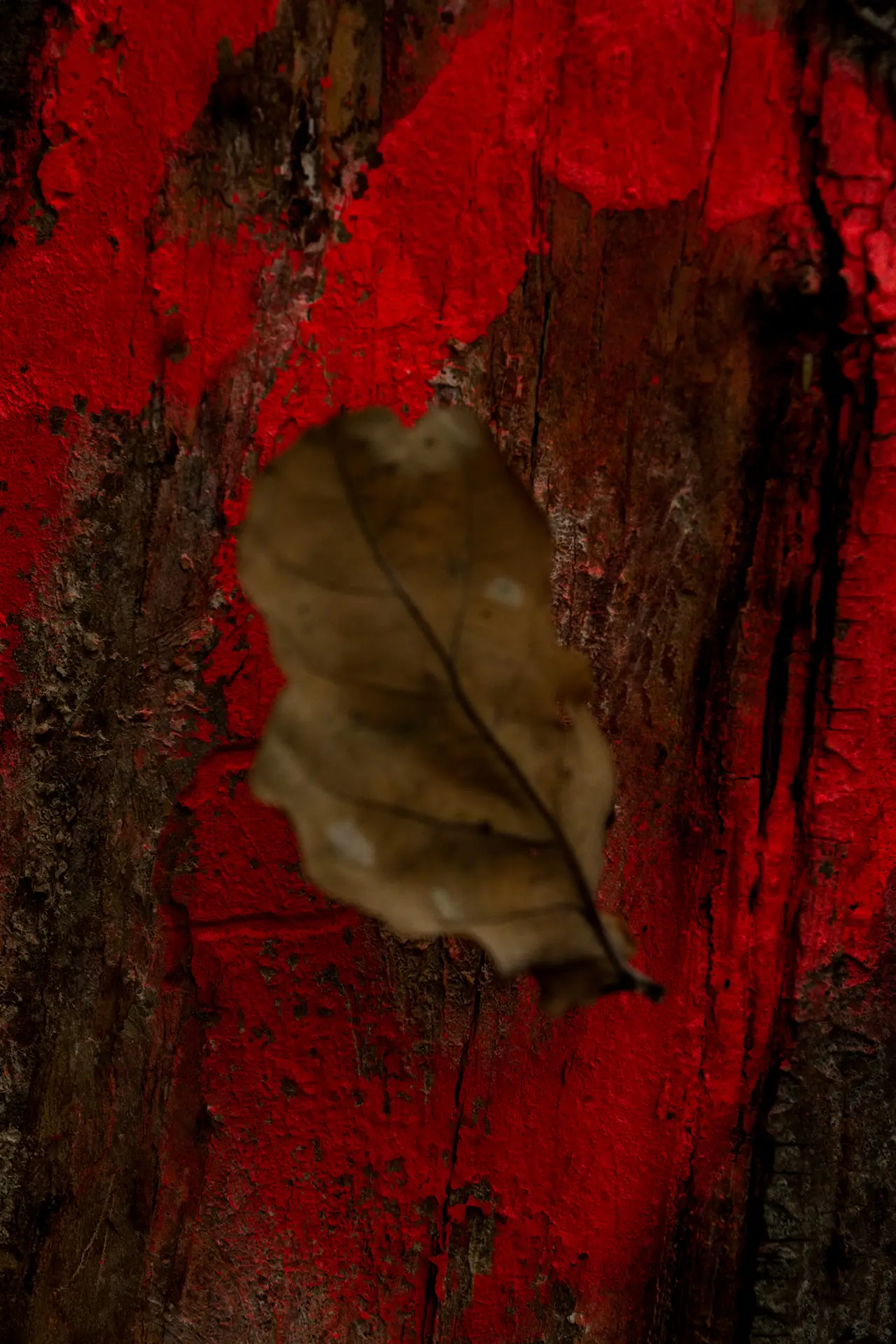

Neon-colored markings on tree bark are part of a forestry guidance system. Dots, lines, crosses, and numbers indicate, among other things, trees marked for logging, skid trails, property boundaries, or forest inventory records. What appears in the forest as an abstract visual language is in fact an expression of precise organization and economic planning.
The photographs detach these signs from their functional context and point to a fundamental contradiction: although forests in Germany are often perceived as untouched nature, hardly any true old-growth forests remain. The majority of Germany’s approximately 11 million hectares of forest are used for forestry, while only around three percent are permanently left to natural development. The series draws attention to these quiet interventions – to the forest as a managed, marked, and economically ordered space.
Neonfarbene Markierungen auf Baumrinden sind Teil eines forstwirtschaftlichen Leitsystems. Punkte, Striche, Kreuze oder Zahlen kennzeichnen unter anderem zu fällende Bäume, Rückegassen, Besitzgrenzen oder Bestandsaufnahmen. Was im Wald wie eine abstrakte Zeichensprache erscheint, ist Ausdruck einer präzisen Ordnung und ökonomischen Planung.
Die Fotografien lösen diese Zeichen aus ihrem funktionalen Zusammenhang und verweisen sie auf einen grundlegenden Widerspruch: Obwohl der Wald in Deutschland oft als ursprüngliche Natur wahrgenommen wird, existieren kaum noch echte Urwälder. Der Großteil der rund 11 Millionen Hektar Waldfläche wird forstwirtschaftlich genutzt; nur etwa drei Prozent der Wälder sind dauerhaft einer natürlichen Entwicklung überlassen. Die Serie richtet den Blick auf diese stillen Eingriffe – auf den Wald als verwalteten, markierten und wirtschaftlich geordneten Raum.